Understanding and Assessing Fuel Loading in the Southeastern United States
Dakota Wagner, David Godwin, Christian Fernandez
Publication ID: Fact Sheet 2025-2 Published: 2025 Revised: 2026
(View PDF)
Quantifying the fuel loading of a burn unit is important for understanding potential fire behavior and smoke emissions. Recognizing the relationship between fuel loads and fire behavior is also essential for achieving successful management and restoration goals. Among other things, a burn unit’s fuel load can influence the amount of smoke released, flame lengths, and duration of burning during a prescribed fire.
What is Fuel Loading?
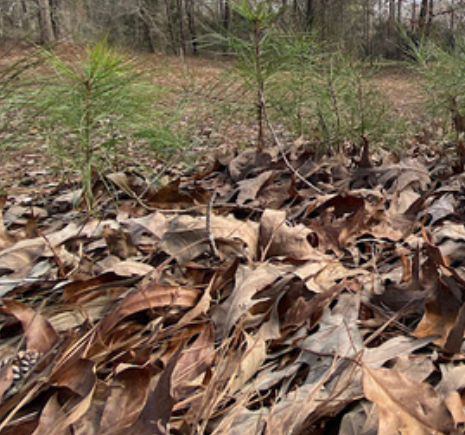
In wildland fire, fuels are the dead and live material available to burn. Fuel loading is the amount of fuel present at a particular location typically reported in tons per acre. There are eight commonly used fuel loading classes: duff, litter, shrub, herb, and four woody debris size categories (1-hour, 10-hour, 100-hour, 1000-hour). Total fuels refer to all live and dead vegetation, litter, and organic material regardless of whether they are likely to burn during a fire. Available fuels are a subset of total fuels that can be ignited and consumed by a fire under the prevailing environmental conditions.
Fuel Size Categories
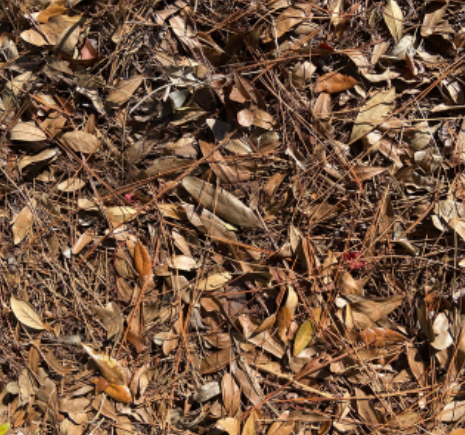
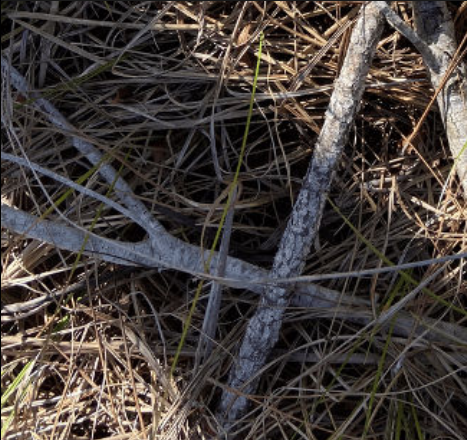
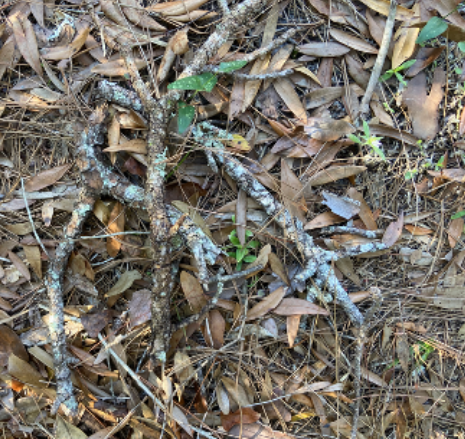
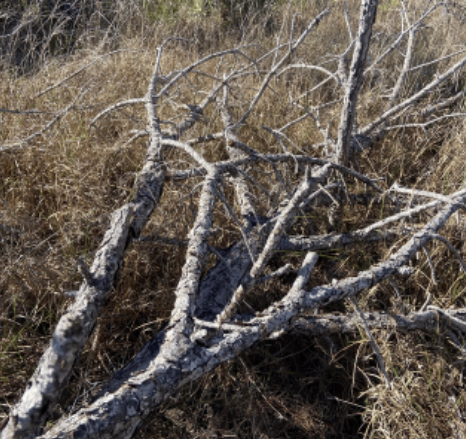
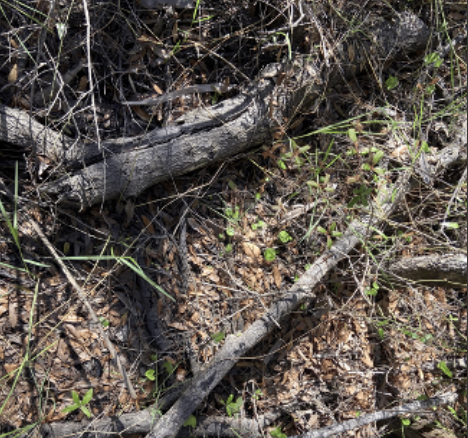
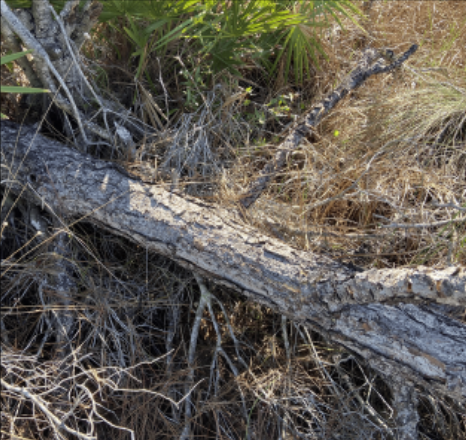
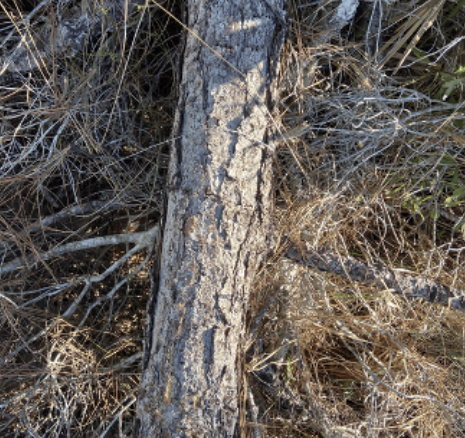
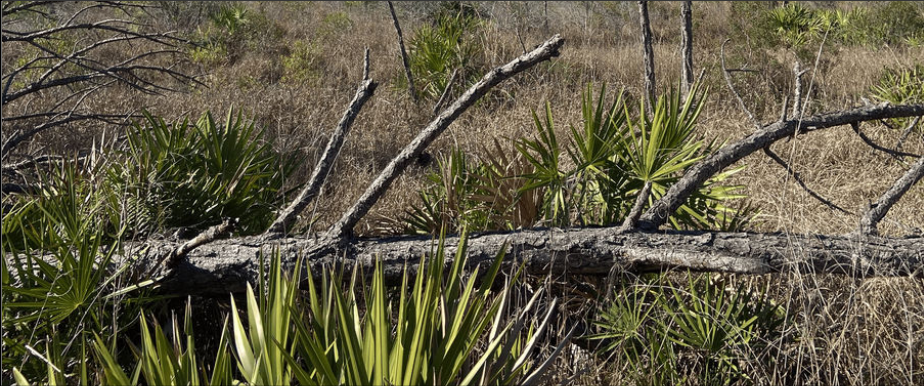
Fuel size categories refer to down and dead materials. The ‘hours’ are based on how quickly fuels gain or lose moisture, not how long they take to burn or be fully consumed – a common misconception. For example, 1-hour fuels adjust quickly to changes in relative humidity and environmental moisture, whereas 100-hour fuels take longer to dry out or absorb moisture (see Table 1).
| Fuel Size Categories | Size (Diameter) | Photo | |
|---|---|---|---|
| 1-hour | Less than 0.25 in. |
|
|
| 10-hour | 0.25 to 1 in. |
|
|
| 100-hour | 1 to 3 in. |
|
|
| 1,000-hour | 3 to 8 in. |
|
|
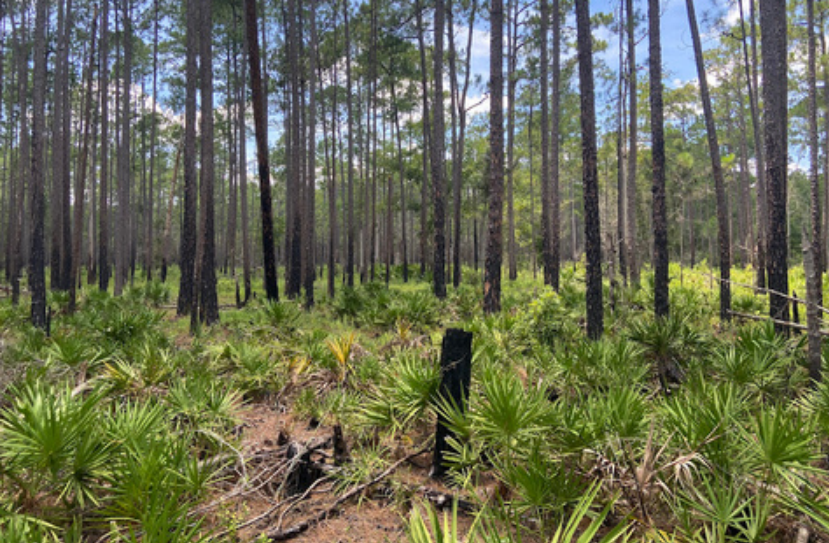
Additionally, some burn managers categorize fuel loading based on fuel type found in their local natural communities. For example, the South Carolina Forestry Commission includes fuels specific to the region, such as wiregrass and palmetto, in their Fuel Load Estimation Guide for South Carolina (See Table 2).
Several factors influence fuel loading including forest type, site history, and management activity. Natural events, such as storms (e.g., hurricanes, tornadoes, or ice storms) or insect outbreaks, can increase fuel loads by adding fallen trees, broken branches, and other debris to the landscape. The occurrence of fire itself can either increase or decrease fuel loading depending on the circumstances. For example, a prescribed burn that top-kills live vegetation can leave behind dead material that becomes fuel for future fires, while a high-severity wildfire might reduce fuel loads to ash, effectively lowering the available fuel.
Management activities can also significantly alter fuel accumulation. Burn units with mechanical fuel treatments (i.e., mastication or mowing), logging, and/or invasive species treatments may have higher concentrations of woody debris. Other management practices, such as mowing, grazing, or previous prescribed burns, can reduce fuel loads over time or influence the distribution of fuels.
| Fuel Type | Total Tons Per Acre | ||
|---|---|---|---|
| Low | Medium | High | |
| Pine Litter | 3 | 8 | 14 |
| Hardwood Litter | 3 | 5 | 7 |
| Pine/Hardwood Litter Mix | 3 | 6 | 8 |
| Wiregrass | 2 | 3 | 5 |
| Grass/Bush | 2 | 4 | 8 |
| Palmetto/Gallberry | 5 | 10 | 15 |
| Marsh Grass | 4 | 10 | 15 |
| Bay | 10 | 15 | 20 |
| Slash in Place | 8 | 12 | 16 |
| Windrows/Piles | 10 | 15 | 20 |
Measuring Fuels in the Southeast
Fire managers use various methods to estimate fuel loads before conducting a prescribed burn. These methods range from simple and quick to complex and time-consuming. However, consistently measuring fuel loads can be challenging due to the wide array of techniques used both nationally and globally. Additionally, differences in forest types, species composition, and spatial patterns can lead to variations in results. For example, a method applied in a western conifer forest might yield different outcomes than the same method used in an eastern hardwood forest. In the Southeast alone, dozens of distinct natural communities exist, and multiple types may coexist within a single burn unit. To address these complexities, researchers across the country have evaluated and compared the accuracy and efficiency of different fuel load sampling methods (see Keane 2011 and 2012).
There are three primary fuel loading sampling methods: Planar intercept/line transect, fixed-area plot, and photo-series/photo-loading. The photo-series method is the most popular as it relies on ocular estimations and can be completed quickly without equipment. In contrast, both the transect/planar intercept and fixed-area methods require significantly more time and effort because each fuel must be counted and/or measured. Each method is summarized below.
Planar Intercept / Line Transect
The planar intercept sampling method, also called the line transect method, involves counting each fuel class within a plane or crossing a transect. For each fuel class, all material that crosses the transect/plane is tallied and then input into an equation to calculate fuel loading. Fire managers commonly use Brown’s (1974) planar intercept method, for which a video from the Wildland Resources Department at Utah State University provides detailed instructions on estimating fuel loads with this approach (see Additional Materials section).
There are two potential drawbacks to be aware of when using this method. First, failing to adjust transects to account for variations in slope and aspect within the stand can introduce bias into the data. Second, fuel loading may not be accurately captured in stands with highly variable downed wood unless transects are sufficiently long or repeated frequently enough to account for this variability.
Fixed-Area Plot
Fixed-area plot sampling is the most time-intensive fuel load sampling method as it requires the collection or volumetric measurement of all materials within a fixed plot. This method is typically only used by researchers to answer specific fuel loading questions rather than by burn managers.
Photo-Series / Photo-Loading
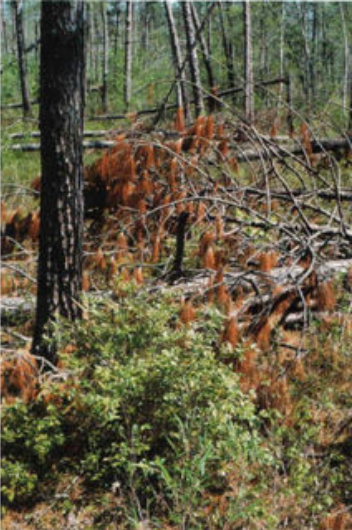
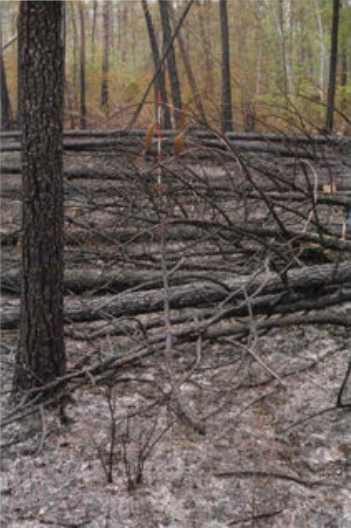
In the photo-series method, fuel loading is estimated by visually matching observed fuelbed conditions to photographs where fuels have been previously measured and quantified. While this method is the most efficient, keep in mind that photographs and fuel loading measurements are based on specific observations and will not necessarily be an exact representation of the overall landscape. For this reason, it is important to use photo-series guides that closest match the forest type(s) of the burn unit.
There are several photo-series guides in the Southeast, ranging from post-hurricane conditions in the Coastal Plain to long-unburned forests of the Southern Appalachian Mountains (see Photo-Series Guides section). If there are no photo-series guides that accurately depict a burn unit, Keane and others (2021) published a protocol for creating photo-load sequences from field-sampled fuelbeds that is less time intensive than previously used methods (see Additional Resources section).
Example photos from “Photo Series for Estimating Post-Hurricane Residues and Fire Behavior in Southern Pine”. Image courtesy of USFS.
Conclusion
Accurate fuel loading measurements are essential for effective burn planning. Each method (photo-series, planar intercept, or fixed-area plot) has unique strengths and limitations, with the choice depending on the burn manager’s objectives and resources. Measuring fuel loading helps predict fire behavior, manage smoke, and achieve ecological goals. Many smoke models also require fuel loading as an input, as the amount of smoke produced depends partly on the fuel consumed.
Photo-Series Guides:
- Fuel Treatments in Pine Flatwoods https://southernfireexchange.org/wp-content/uploads/Fuel_Treatments_Photo_Guide.pdf
- Fuel Load Estimation Guide for South Carolina https://www.scfc.gov/wp-content/uploads/2021/07/fuelloads.pdf
- Digital Fuels Photo Series (with sites covering a wide range of fuels across the country) https://depts.washington.edu/nwfire/dps/
- Photo Guide for Estimating Fuel Loading in the Southern Appalachian Mountains
https://research.fs.usda.gov/treesearch/58406 - Photos for Estimating Fuel Loadings Before and After Prescribed Burning in the Upper Coastal Plain of the
Southeast https://research.fs.usda.gov/treesearch/download/896.pdf - Photo Series for Estimating Post-Hurricane Residues and Fire Behavior in Southern Pine
https://www.srs.fs.usda.gov/pubs/gtr/gtr_se082.pdf - Photo Guide for Estimating Fuel Loading and Fire Behavior in Mixed-Oak Forests of the Mid-Atlantic Region
https://research.fs.usda.gov/treesearch/17319
Additional Resources:
- BlueSky Playground includes tools for estimating fuel loading, fuel consumption, and smoke modeling. https://tools.airfire.org/playground/v3.5/emissionsinputs.php?scenario_id=167336f86127fb
- Prescribed Fire Basics: Fuels (Oregon State University Extension)
https://extension.oregonstate.edu/sites/default/files/documents/12581/osu-rx-modules-fuels-em9386.pdf - Describing Wildland Fire Surface Fuel Loading for Fire Management: A Review of Approaches, Methods, and
Systems (Keane 2012) https://www.fs.usda.gov/rm/pubs_other/rmrs_2013_keane_r001.pdf - A Comparison of Sampling Techniques to Estimate Wildland Surface Fuel Loading in Montane Forests of the
Northern Rocky Mountains (Keane 2011) https://www.firelab.org/sites/default/files/2021-02/stix_studyplanV2.pdf - Creating local fuel loading estimates using the Photoload Sampling Technique (USFS)
https://research.fs.usda.gov/rmrs/news/highlights/creating-local-fuel-loading-estimates-using-photoload-sampling-technique - Introduction to Prescribed Fires in Southern Ecosystems (Waldrop 2012)
https://research.fs.usda.gov/treesearch/41316 - Fine Scale Vegetation Classification and Fuel Load Mapping for Prescribed Burning (Bailey 2007)
https://www.fs.usda.gov/rm/pubs/rmrs_p046/rmrs_p046_261_273.pdf - Fuel Load Sampling Method (Lutes and Keane 2006)
https://www.fs.usda.gov/rm/pubs_series/rmrs/gtr/rmrs_gtr164/rmrs_gtr164_06_fuel_load.pdf - Introduction to Fuel Loading (World of Wildland Fire) https://www.youtube.com/watch?v=1QQlDNA04Jo
- Fuel Load Monitoring: Brown’s Planar Transect Method (Utah State University) https://youtu.be/A-KpTeEOshs?si=_c6HkJPu3-W5N9K0