A member of the JFSP Fire Science Exchange Network. Some materials may not be available at this time as we update our website and resources to meet accessibility standards.

How tweets can map a #wildfire

Social media could help monitor air pollution that physical monitors miss.

High Country News

In their study, published by the International Conference on Social Media & Society, Sachdeva and McCaffrey analyzed close to 39,000 tweets posted between May and September 2015 in California. They stripped the tweets to reveal their core subjects: smoke in the air, fallen ash, haziness, smell. By tagging the tweets with the location in which they were posted, the researchers created a verbatim map: a landscape of fire based on the people who experienced it. Their modeling proved accurate when compared to figures from air quality monitors.

Click here to read “Using Social Media to Predict Air Pollution during California Wildfires”
Recent Posts

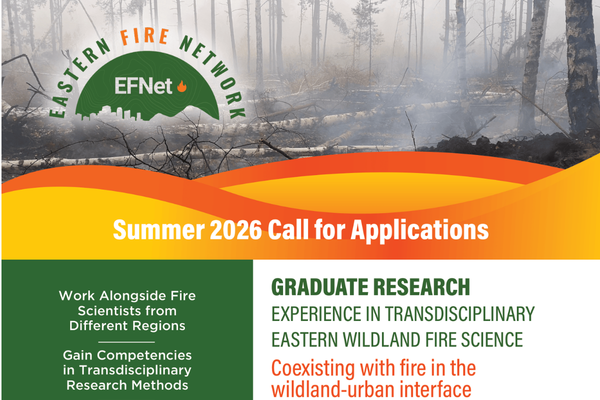
Flier describing a call for applications for the summer 2026 EFNet Graduate Research experience on the WUI.

Call for Applications: EFNet Graduate Research Experience on WUI

  Call for Applications: EFNet Graduate Research Experience on the WUI The Eastern Fire Network (EFNet) recently announced a call for applications for their summer ...
Read More →
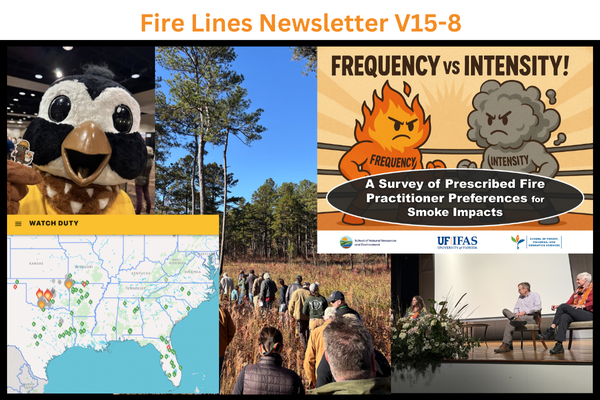
Collage of pictures from volume 15 issue 8 of Fire Lines.

New Fire Lines Newsletter (vol. 15 is. 8)

  New Fire Lines Newsletter: Volume 15, Issue 8 The latest issue (Volume 15, Issue 8) of the Southern Fire Exchange “Fire Lines” newsletter has ...
Read More →

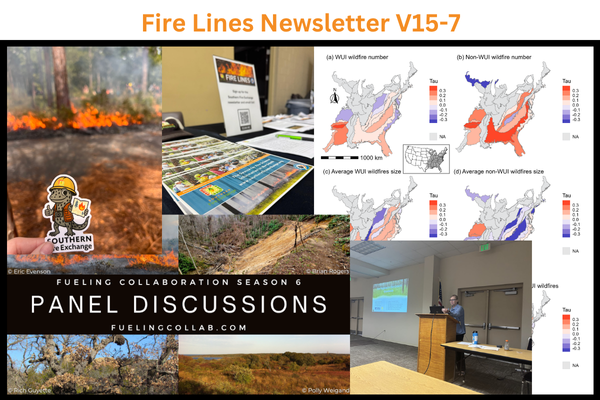
New Fire Lines Newsletter (vol. 15 is. 7)

  New Fire Lines Newsletter: Volume 15, Issue 7 The latest issue (Volume 15, Issue 7) of the Southern Fire Exchange “Fire Lines” newsletter has ...
Read More →
Scroll to Top