
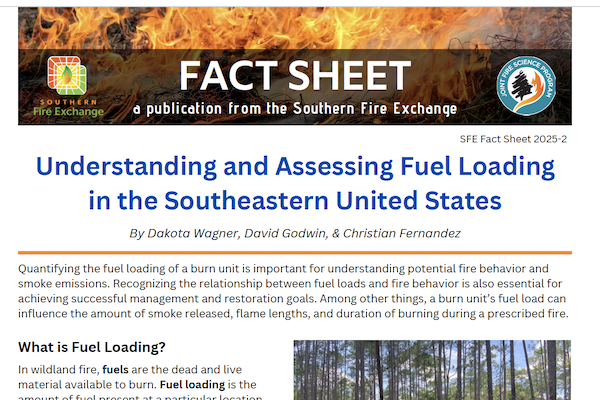
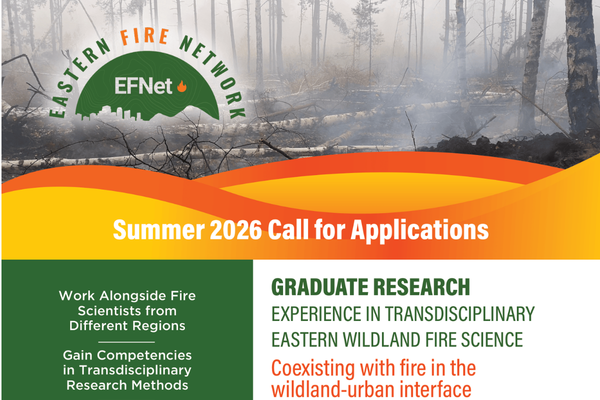
Call for Applications: EFNet Graduate Research Experience on WUI
Call for Applications: EFNet Graduate Research Experience on the WUI The Eastern Fire Network (EFNet) recently announced a call for applications for their summer ...
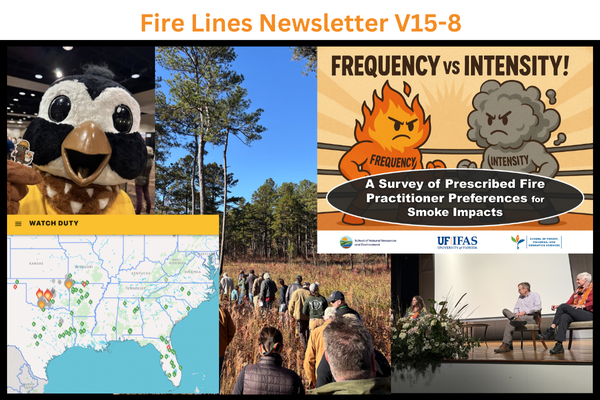
New Fire Lines Newsletter (vol. 15 is. 8)
New Fire Lines Newsletter: Volume 15, Issue 8 The latest issue (Volume 15, Issue 8) of the Southern Fire Exchange “Fire Lines” newsletter has ...
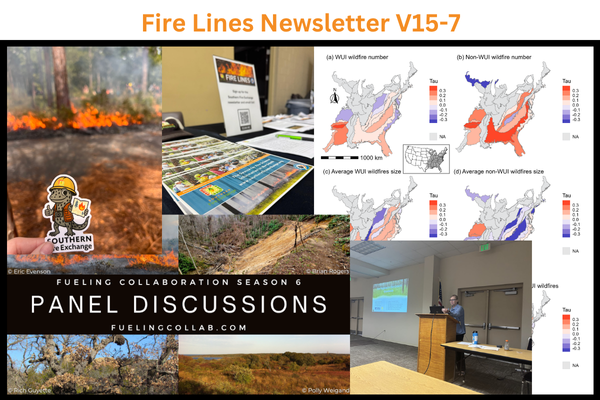
New Fire Lines Newsletter (vol. 15 is. 7)
New Fire Lines Newsletter: Volume 15, Issue 7 The latest issue (Volume 15, Issue 7) of the Southern Fire Exchange “Fire Lines” newsletter has ...