Understanding Hurricane Impacts
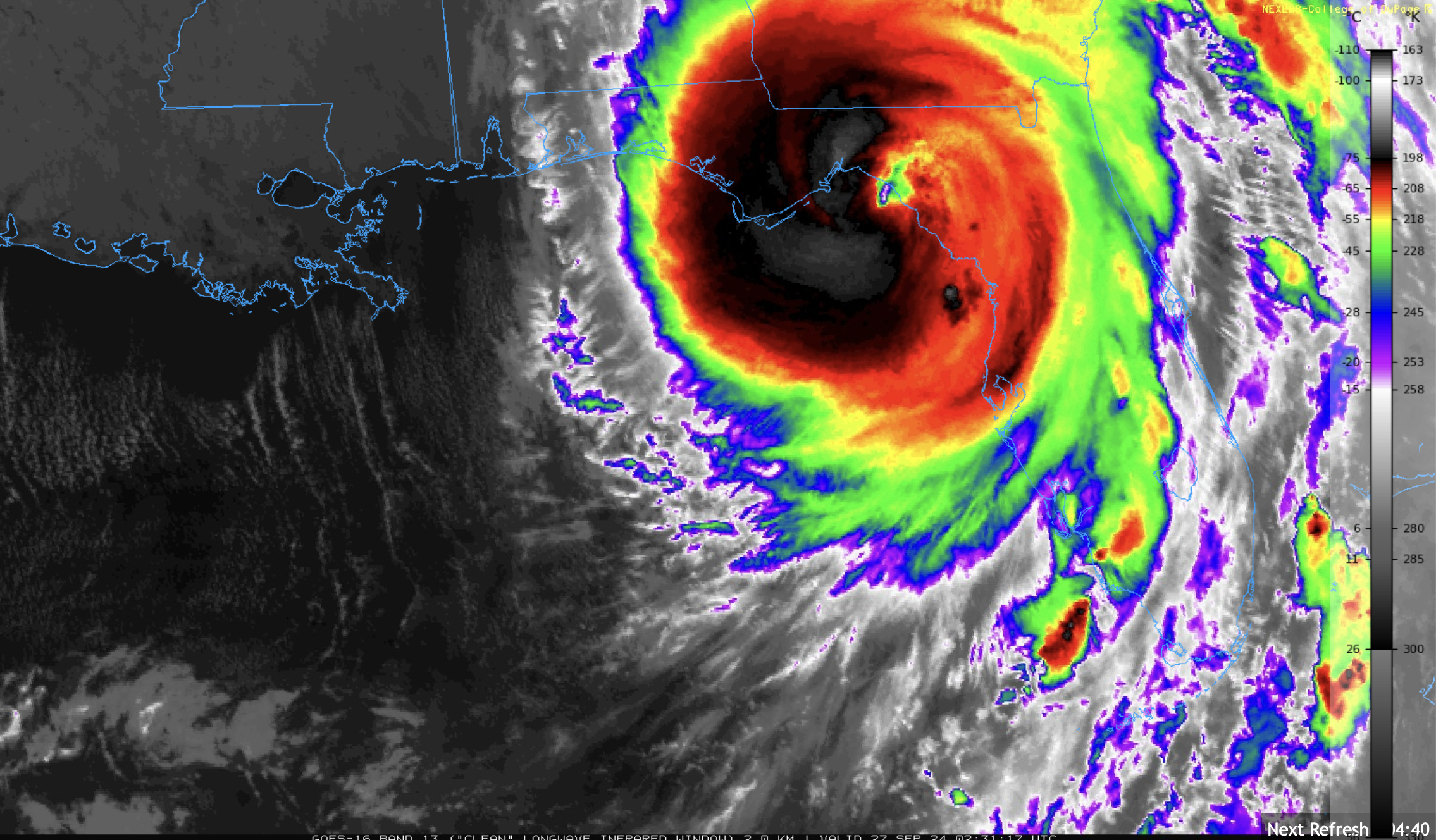
As communities and natural resource managers work to rebuild following Hurricane Helene, one important concern that emerges is the increased risk of wildfires in the aftermath of such a major event. When hurricanes bring strong winds, heavy rains, and flooding, they often create conditions that exacerbate the potential for wildfires and change the behavior of prescribed fires. In the weeks and months following Hurricane Helen, wildland fire managers have been studying the conditions on the ground and scouring lessons learned from previous storms.
Several fact sheets and reports have been compiled to help fire managers understand the new fuel conditions and to prepare for potential dangers. As we look ahead, it’s critical to stay informed and prepared. The fact sheets and reports on wildfire risk provide essential information to ensure safety and resilience in the face of ongoing challenges.
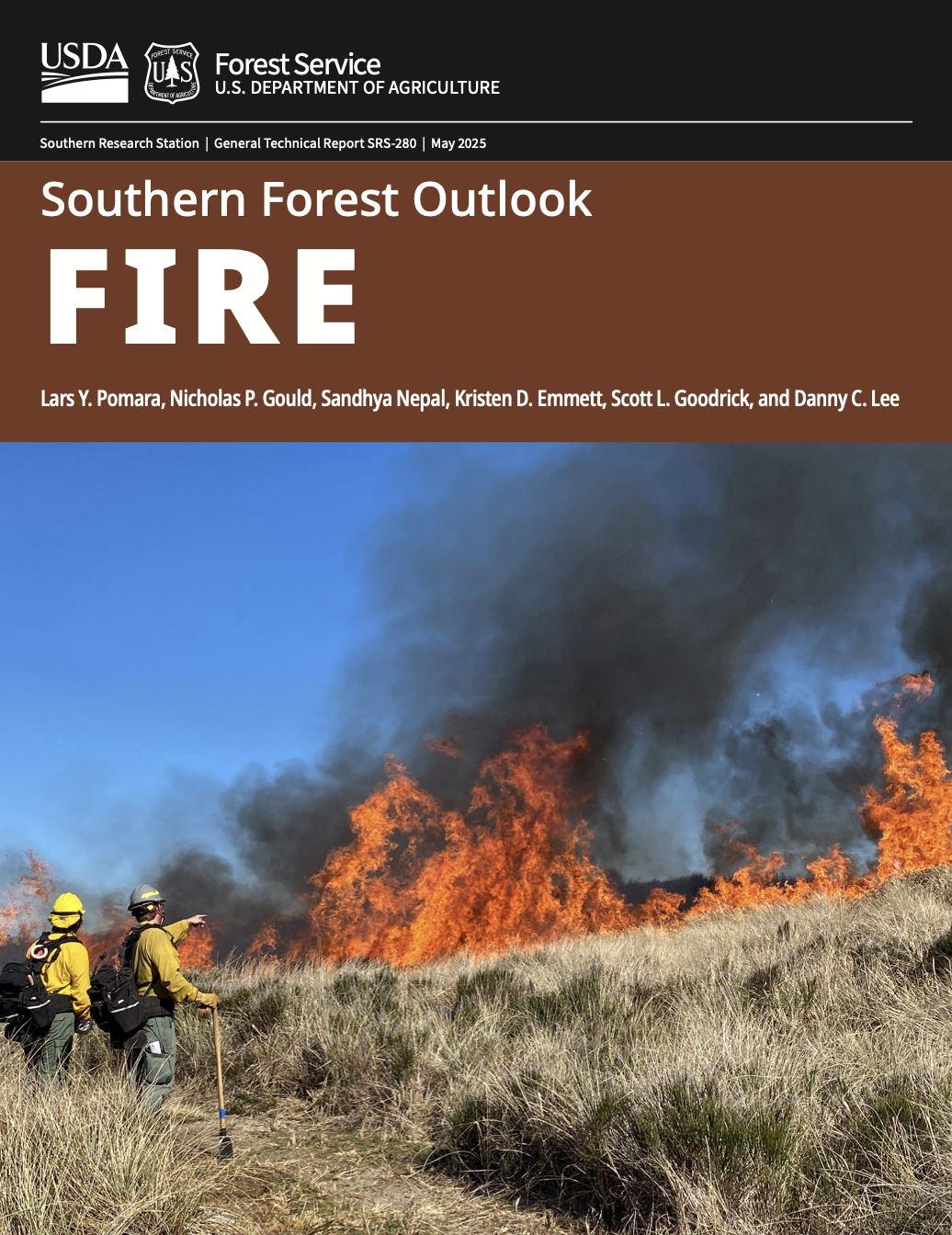
Southern Forest Outlook: Fire (USGS GTR SRS-280)
Written by Lars Pomara, Nicholas Gould, Sandhya Nepal, Kristen Emmett, Scott Goodrick, and Danny Lee, USDA Forest Service Southern Research Station
The USDA Forest Service Southern Research Team has released the Southern Forest Outlook Fire report (published 2025). The report is a regional analysis of trends, issues, and the future of wildland fire in the southeast. This report was developed by scientists at the Southern Research Station in partnership with the US Forest Service Region 8 Fire and Aviation Group and the Southeastern Cohesive Wildland Fire Management Strategy.
While not specifically related to Hurricane Helene, this document may be a helpful resource for developing active management plans that seek to increase ecosystem resilience. Download the full report (pdf).
Report Abstract
This report in support of the Southern Forest Outlook assesses current and future risks associated with wildfire and smoke in the Southern United States, through a synthesis of literature review and new analysis. Key questions concern wildfire risk management and resilience-building efforts in the face of a changing climate, risks to forest ecosystem services, the potentially disproportionate impacts of fire and smoke on socioeconomically vulnerable populations, and how the growing wildland-urban interface, changes in fire regimes, and changes in safe prescribed burning conditions are likely to impact future management efforts. Results portray the regional geography of wildfire and smoke risks to people and ecosystem services, and where high return on fuel reduction investments can be achieved. Modeled future changes suggest shifts towards forests more prone to hazardous fire, with changes in risks to people and ecosystem services varying geographically and among different future scenarios. Results also suggest that preemptive forest management efforts including prescribed fire can offset future changes in wildfire and smoke risks. Ongoing and future changes in climate, forests, and society present complex wildfire risk challenges, but pathways exist to build forest resilience and mitigate risk.
LANDFIRE Fact Sheet on Hurricane Helene Products
Developed by Brian Tolk, KBR Contractor, USGS EROS
The LANDFIRE team has released a short fact sheet providing details on how they have integrated the USDA Forest Service Southern Research Station HiForm Major Forest Damage Data into the LANDFIRE LF 2024 PDist spatial dataset. This approach allows the LANDFIRE system to incorporate Hurricane Helene impacts in the Southern Appalachians on a much faster turnaround. Read the fact sheet (pdf).
HiForm Maps of Hurricane Helene Impacts
Developed by the USDA Forest Service Southern Research Station and the UNC Asheville NMAC
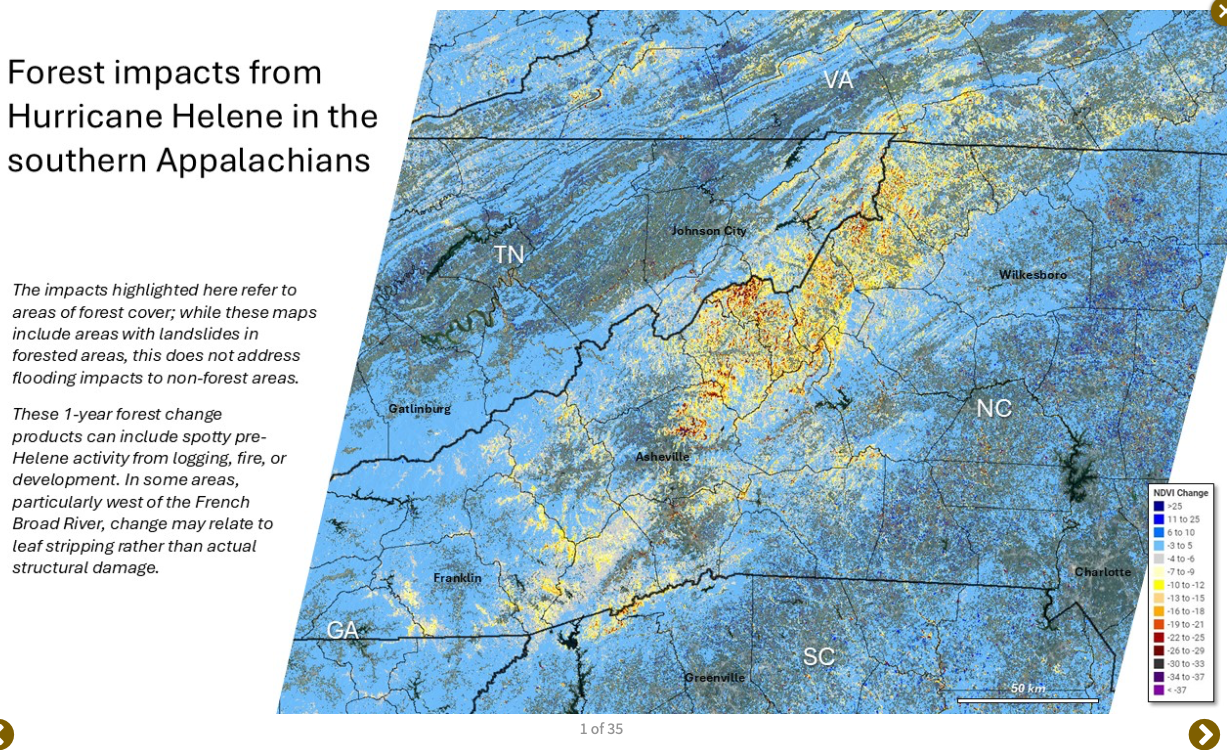
The USDA Forest Service HiForm (High-resolution forest mapping) team assembled a report with a series of spatial data products of the Hurricane Helene impacts from the Coastal Plain to the Southern Appalachians. The dataset document includes links to download or access the data via ArcGIS Online. Check out the website with maps and additional resources.
Spring 2025 Fuels and Fire Behavior Advisory: Southern Appalachian Mountains and Foothills
Developed by the Southern Area Decision Support Team with state and federal partners
Published March 25, 2025. Fuels and Fire Behavior Advisories are issued when conditions are conducive to active and uncharacteristic wildland fire behavior. Wildland fire managers, prescribed burners, emergency managers, and private landowners should note this timely and important advisory. The conditions this year, and in particular over the month of March 2025, have led to low relative humidities, a rainfall deficit, and extremely low fuel moisture. These environmental conditions combined with post-Helene fuels have resulted in uncharacteristic wildfire behavior in the southern Appalachian Mountains of Georgia, South Carolina, North Carolina, and Tennessee. Read the full advisory (pdf).
Hurricane Helene Strategic Wildfire Risk Assessment
Developed by Ben Gannon, David Quisenberry, and Rick Stratton from USDA Forest Service Region 8
This strategic wildfire rapid risk assessment seeks to identify areas where hurricane disturbance may compound existing wildfire risks to inform post-hurricane fuels management priorities and wildfire response strategies. The detailed 10-page report (published in March of 2025) is based on maps created using the USDA Forest Service Southern Research Station HiForm (HiForm details) four class disturbance map of Helene impacts to Southern Appalachians, DeltaViewer five class disturbance map of the full hurricane path, and wildfire risk values from the Southern Wildfire Risk Assessment (SouthWRAP details). The report provides an entire-region perspective of the impacts of Hurricane Helene and the implications for wildfire risk.

Fuels and Fire Management Considerations for Hurricane Helene Damaged Areas
Developed by USDA Forest Service Region 8
This detailed 19-page report published in February 2025 provides fuel loading and modeling guidance, fire behavior expectations for both wildfire response, and prescribed fire implementation. The content of this document may become outdated or updated as lessons are learned from actions and research in storm-impacted areas.
Southern Area Spring 2025 Wildfire Risk Assessment
Developed by the Southern Area Decision Support Group
The Southeastern United States is entering a highly dynamic and uncertain spring 2025 wildfire season, influenced by persistent drought, fuel availability from previous weather events, and the ongoing effects of La Niña. This detailed 44-page report provides fuel loading and modeling guidance, fire behavior expectations for both wildfire response and prescribed fire implementation.
Post-Hurricane Fuels and Suppression Considerations Bulletin
Developed by the Southern Area Decision Support Group
This short document (pdf) assembled in the fall of 2024 highlights the increased wildfire risks and suppression challenges following Hurricane Helene, emphasizing changes in fuel conditions such as increased fine fuels and more open canopy areas. It discusses various hazards to firefighting, including unstable roads, hazardous debris, and the potential for prolonged fire intensity due to storm debris and fallen trees. Mitigation strategies are proposed, such as using real-time mapping, relying more on aerial resources, implementing prescribed burns, and improving communication and safety protocols for responders in these altered conditions.
Hurricane and Tropical Storm Impacts on Prescribed Fire and Wildfire Management Practices
Produced by the Southern Fire Exchange and University of Florida IFAS Extension
Created after Hurricane Michael in 2018, this SFE and University of Florida IFAS Extension fact sheet discusses how hurricanes and tropical storms significantly affect wildfire and prescribed fire management by altering forest structures, fuel loads, and fire behavior. It highlights the increased fuel loading, changes in vegetation, and potential fire hazards due to storm damage, while also addressing smoke management challenges and access issues for firefighting efforts in post-storm environments.
Related Research
The influence of experimental wind disturbance on forest fuels and fire characteristics
Jeffery B. Cannon, Joseph J. O’Brien, E. Louise Loudermilk, Matthew B. Dickinson, Chris J. Peterson, “The influence of experimental wind disturbance on forest fuels and fire characteristics,” Forest Ecology and Management, Volume 330, 2014, Pages 294-303, ISSN 0378-1127, https://doi.org/10.1016/j.foreco.2014.07.021.
Abstract: Current theory in disturbance ecology predicts that extreme disturbances in rapid succession can lead to dramatic changes in species composition or ecosystem processes due to interactions among disturbances. However, the extent to which less catastrophic, yet chronic, disturbances such as wind damage and fire interact is not well studied. In this study, we simulated wind-caused gaps in a Pinus taeda forest in the Piedmont of north-central Georgia using static winching of trees to examine how wind damage may alter fuel characteristics and the behavior of subsequent prescribed fire. We found that experimental wind disturbance increased levels of fine and coarse woody fuels (but not leaf litter), increased spatial heterogeneity of fuels, and led to more complete consumption of leaf litter. These patterns led to changes in fire combustion characteristics in experimental gap plots within areas of downed tree crowns where we observed a large increase in fire radiative flux density (kWm−2) and its time integral, fire radiative energy density (MJm−2). These results suggest that wind disturbance may interact with fire not only through addition of fuel, but also through more subtle changes in fuel composition, consumption, and arrangement. More broadly, this study shows that disturbances can influence one another via a variety of mechanisms not all of which are immediately obvious. Understanding disturbance interactions can allow forest managers to make more informed decisions about how wind disturbance influences fuel heterogeneity, and how management processes, such as prescribed fire can interact with other prior wind disturbances to interactively shape plant communities.
Keywords: Wind disturbance; Fire behavior; Fire combustion characteristics; Fuel arrangement;
The impact of Hurricane Michael on longleaf pine habitats in Florida
Zampieri, N.E., Pau, S. & Okamoto, D.K. The impact of Hurricane Michael on longleaf pine habitats in Florida. Sci Rep 10, 8483 (2020). https://doi.org/10.1038/s41598-020-65436-9
Abstract: Global biodiversity hotspots (GBHs) are increasingly vulnerable to human stressors such as anthropogenic climate change, which will alter the ecology of these habitats, even where protected. The longleaf pine (Pinus palustris) ecosystem (LPE) of the North American Coastal Plain is a GBH where disturbances are integral for ecosystem maintenance. However, stronger storms due to climate change may be outside their historical norm. In this study, we estimate the extent of Florida LPE that was directly affected by Hurricane Michael in 2018, an unprecedented Category 5 storm. We then leveraged a unique data set in a Before-After study of four sites within this region. We used variable-area transects and generalized linear mixed-effects models to estimate tree densities and logistic regression to estimate mortality by size class. We found at least 28% of the global total remaining extent of LPE was affected in Florida alone. Mortality was highest in medium sized trees (30–45 cm dbh) and ranged from 4.6–15.4% at sites further from the storm center, but increased to 87.8% near the storm center. As the frequency and intensity of extreme events increases, management plans to mitigate climate change need to account for large-scale stochastic mortality events to preserve critical habitats.
Temporal effects of hurricanes and prescribed fire on fuel loading and pine reproduction in the Southeastern United States
Pile-Knapp, Lauren S.; Guan, Shanyue; Song, Bo; Wang, Geoff G. 2022. Temporal effects of hurricanes and prescribed fire on fuel loading and pine reproduction in the Southeastern United States. In: Willis, John L.; Self, Andrew B.; Siegert, Courtney M., eds. Proceedings of the 21st Biennial Southern Silvicultural Research Conference. Gen. Tech. Rep. SRS-268. Asheville, NC: U.S. Department of Agriculture Forest Service, Southern Research Station: 21–31. https://research.fs.usda.gov/treesearch/65156
Abstract: The frequency and severity of extreme weather events, including hurricanes, are expected to increase in response to global change. Concurrently, southern U.S. forests will experience droughts that may facilitate a rise in wildfire. Wind damage can alter fuel dynamics and forest structure increasing susceptibility to wildfire, especially with drought. To mitigate fuel loads, managers commonly use salvage logging and prescribed fire. Time since disturbance may further reduce loading. To understand the effect of hurricanes on fuel loading, and the impact of time since disturbance and management action, we compared fuel loads and pine reproduction across four hurricanes spanning 24 years. Highly impacted stands were paired with less severely impacted control stands at each site. Fuel accumulations initially increased with hurricane disturbance but stabilized with time. With prescribed fire, coarse woody debris decreased more rapidly than without fire. Without prescribed fire, damaged stands had greater fuel loads than control stands, even after 24 years. Although overstory mortality can provide growing space for regeneration, effects from heavy woody fuel loads and frequent prescribed fire can override opportunities for establishment and recruitment.
Effects of catastrophic wind disturbance, salvage logging, and prescribed fire on fuel loading and composition in a Pinus palustris woodland
Raien K. Emery, Jonathan S. Kleinman, Jonathan D. Goode, Justin L. Hart,
Effects of catastrophic wind disturbance, salvage logging, and prescribed fire on fuel loading and composition in a Pinus palustris woodland, Forest Ecology and Management, Volume 478, 2020, 118515, ISSN 0378-1127, https://doi.org/10.1016/j.foreco.2020.118515
Abstract: Feedbacks between forest vegetation, forest fuels, and fire are critical to the perpetuation of fire-dependent ecosystems. In Pinus palustris (longleaf pine) woodlands, low-intensity fires facilitate a positive feedback in which highly flammable Pinusneedles produced by canopy trees sustain frequent fires. These frequent fires inhibit recruitment of more fire-sensitive species and facilitate P. palustris dominance. Although these relationships are recognized in frequent-fire forests, we do not understand how vegetation-fuels-fire feedbacks may be modified by catastrophic disturbances and subsequent salvage logging in these ecosystems. In this study, we sought to address how the composition of fuelbed components differed between mature, catastrophically wind-disturbed, and salvage-logged sites and how prescribed fire would differentially interact with these fuel complexes. Using a permanent plot network, we quantified total fuel loading and fuel loading by flammability group (seven categories based on flammability characteristics) across the three disturbance treatments before and after operational-scale prescribed fire. For total fuel loading, we found significant interactions between disturbance treatment and time relative to prescribed fire. The fuel complex of mature sites was relatively homogenous, dominated by Pinus needles. Fuels on wind-disturbed and salvaged sites had minor contributions from Pinus needles, but that was somewhat offset by increased contributions by early successional species that have flammability characteristics similar to Pinus needles. The prescribed fire reduced fuel loading across all treatments and homogenized the wind-disturbed and salvage-logged fuel complexes. Although salvage logging resulted in a disparate fuel assemblage, prescribed fire appeared to reduce dissimilarity with the naturally disturbed condition.
Altered cyclone–fire interactions are changing ecosystems
Thomas Ibanez, William J. Platt, Peter J. Bellingham, Ghislain Vieilledent, Janet Franklin, Patrick H. Martin, Christophe Menkes, Diego R. Pérez-Salicrup, Jeremy Russell-Smith, Gunnar Keppel, Altered cyclone–fire interactions are changing ecosystems,Trends in Plant Science, Volume 27, Issue 12, 2022, Pages 1218-1230, ISSN 1360-1385, https://doi.org/10.1016/j.tplants.2022.08.005.
Abstract: Global change is altering interactions between ecological disturbances. We review interactions between tropical cyclones and fires that affect woody biomes in many islands and coastal areas. Cyclone-induced damage to trees can increase fuel loads on the ground and dryness in the understory, which increases the likelihood, intensity, and area of subsequent fires. In forest biomes, cyclone–fire interactions may initiate a grass–fire cycle and establish stable open-canopy biomes. In cyclone-prone regions, frequent cyclone-enhanced fires may generate and maintain stable open-canopy biomes (e.g., savannas and woodlands). We discuss how global change is transforming fire and cyclone regimes, extensively altering cyclone–fire interactions. These altered cyclone–fire interactions are shifting biomes away from historical states and causing loss of biodiversity.