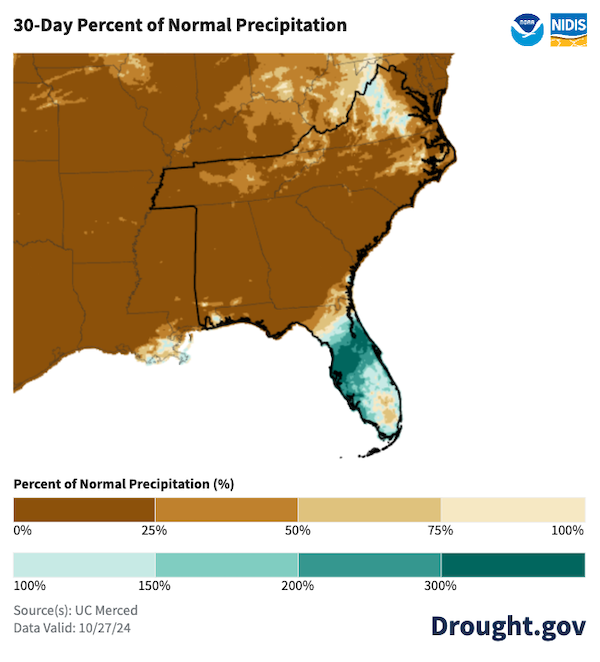
For many areas in the southeastern US, it is dry. Very dry. From where I sit here in Tallahassee, Florida, we had 0.22″ of recorded rain during the month of October. Even though October is one of the driest months of the year for Tallahassee, we typically receive 3.24″ of rain in October. It is also abnormally warm and the warm temperatures, low humidities, and a lack of rain have made things crispy out there. ENSO forecasts for the late fall, winter, and early spring, call for below-normal precipitation and above-normal temperatures in the months ahead.
To get a deep dive into the current regional drought picture for the southeast, check out this November 1st update from the southeast branch of the National Integrated Drought Information Center.
Key Points from the Update (compiled by Meredith Muth, NOAA/NIDIS):
- Much of the Southeast experienced little to no rain in the month of October, which drove expansion of dry conditions including in some areas that recently received substantial rainfall from Hurricanes Helene and Milton.
- A number of locations have over 30 days without any measurable rainfall and are on track to tie for their driest of ANY month on record dating back to the late 1800s.
- Above-normal temperatures, including near-record average high temperatures in some areas, have contributed to the drying out of soils.
- Agricultural agents in Alabama, Georgia, Tennessee, and the Florida panhandle are reporting quickly deteriorating conditions. Impacts include poor pastures leading to feeding hay to cattle and delays in fall and winter planting. Fire risk is increasing with several burn bans and restrictions in place. However, the dry weather has been beneficial for some late season harvesting.
- Streamflows for most of the region are in the normal range, which puts them in good shape heading into the dry recharge season. The exception is in those areas that have been dry longer and are currently experiencing drought, including Tennessee and Alabama, where many streams are experiencing below-normal flows with impacts to ecological systems and water supply.
- Additional drought development and impacts are likely into early November, as limited rain is forecast in the region for the next week, except for northern Alabama and western Tennessee. The week of November 7 may see a return to near-normal rainfall. More uncertainty exists for the winter months, but the expected weak La Niña pattern may increase the odds of below-normal precipitation for December thru February across Florida, Georgia, Alabama, and South Carolina.
Did you find this summary helpful? Do you want to stay on top of drought conditions in the southeast? You can sign up to receive timely email updates and notifications from NIDIS.